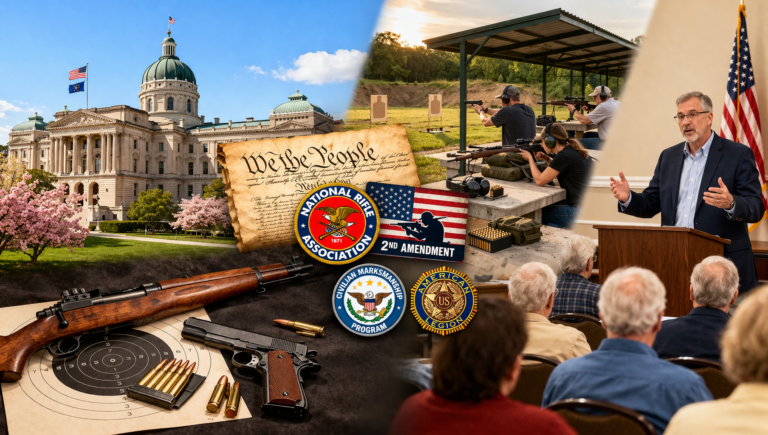
(Below is the opinion of Charlie Hiltunen, President of the Indiana State Rifle Association and NRA Board Member.)
After more than a quarter-century of coordinated legal harassment, the Gary Gun Lawsuit has finally been permanently dismissed. In a unanimous ruling, the Indiana Court of Appeals ended the City of Gary’s 26-year effort to hold law-abiding firearm manufacturers and sellers responsible for crimes committed by unrelated third parties.
This lawsuit, first filed in August of 1999, was never about justice. It was about lawfare—using the courts as a political weapon to achieve gun control objectives that could not survive the legislative process.
The dismissal of the City of Gary’s 26‑year lawsuit is a major victory for the rule of law, for Indiana’s firearm industry, and for law‑abiding gun owners—but it is also a stark warning about how Constitutional Terrorists have engaged in “lawfare” to weaponize the very judicial system that is supposed to protect our Rights & Liberties to bleed out gun makers, advocacy organizations, and individual Second Amendment supporters through abusive litigation. This one win should be treated as a launching point for a much more aggressive strategy to punish those who misuse the courts to undermine constitutionally protected rights, not as a signal to stand down.
The Gary Case Finally Ends
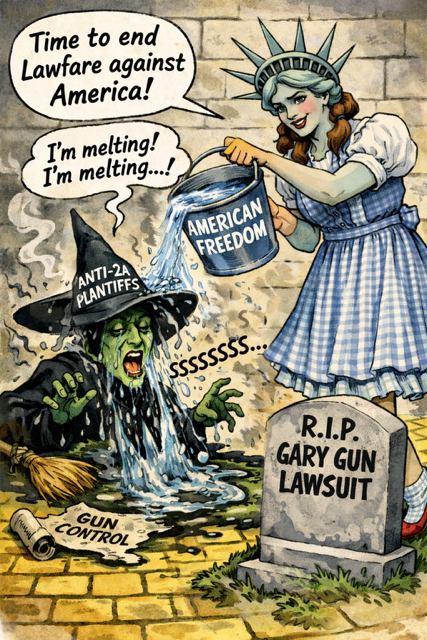
After more than a quarter century of litigation, the Indiana Court of Appeals has unanimously ordered dismissal of Smith & Wesson Corp. v. City of Gary, the 1999 “public nuisance” suit that tried to hold firearm manufacturers and sellers liable for the criminal acts of unrelated third parties. The court upheld a 2024 Indiana law that retroactively reserves to the State of Indiana—not municipalities—the power to bring actions against firearm and ammunition manufacturers and dealers on specified matters, and directed the trial court to dismiss Gary’s case.
Attorney General Todd Rokita hailed the ruling for ensuring that firearms remain available to law‑abiding citizens and preventing a single city or handful of cities from using lawsuits to force policy changes outside the legislative process. Solicitor General James Barta emphasized that the decision confirms the General Assembly’s authority to preempt local governments in this field, ensuring a uniform statewide policy and protecting Hoosiers from piecemeal litigation that could restrict access to firearms.
Lawfare and Constitutional Terrorism
Gary’s lawsuit was never about a legitimate tort theory; it was part of a coordinated national lawfare campaign in the late 1990s and early 2000s in which more than 40 big‑city mayors, working with Brady‑aligned activists and trial lawyers, attempted to bankrupt the firearm industry through creative public‑nuisance and marketing claims. These suits sought to impose back‑door gun control by blaming lawful, non‑defective products for criminal misuse, rather than holding criminals accountable.
Most of those municipal suits—filed in Atlanta, Chicago, New York, Los Angeles, San Francisco, Detroit, St. Louis, and others—were ultimately dismissed or dropped, often after states enacted preemption statutes modeled on what Indiana has now done with House Bill 1235. Congress likewise responded to this wave of abuse with the Protection of Lawful Commerce in Arms Act (PLCAA) in 2005, which blocks civil actions that attempt to make manufacturers and dealers pay for “the harm caused by those who criminally or unlawfully misuse” lawfully sold, non‑defective firearms and ammunition.
The Dark Reality: Lawfare Has Not Ended
Defeat in the first round of municipal lawfare has not ended the campaign against the firearm community; it has simply changed tactics and legal theories. Today, firearm manufacturers are still being sued under alternative legal theories—public nuisance, negligent marketing, consumer protection statutes,—often with one strategic objective: financial destruction through legal attrition.
One especially insidious tactic has emerged: Plaintiffs deliberately allege criminal conduct in the complaint—not because the facts support criminal conduct, but because the mere allegation can trigger insurance exclusions and deny coverage for defense costs, thus bleeding out the firearms manufacturer or other victim of their abuse. This tactic is not about winning cases…It is about bankrupting constitutionally protected industries and intimidating lawful citizens…and it doesn’t stop with manufacturers. Advocacy organizations, retailers, and even individual gun owners are increasingly targeted using the same abusive strategies.
A Call for Accountability – What Must Happen Next
We must be clear: Those who knowingly abuse the judicial system to maliciously destroy individuals or entities—or to undermine constitutionally protected rights—are not acting in good faith. They are engaging in Constitutional Terrorism.
The Gary decision proves that when legislatures and attorneys general act with clarity and resolve, abusive lawfare can be shut down—but it also underscores the need to go much further (we can’t wait or withstand another 26 years of abuse). If gun control anarchists and allied officials know there are no consequences for filing fact‑free, policy‑driven lawsuits designed to bankrupt disfavored industries and chill constitutional rights, they will keep escalating the attacks.
To truly deter Constitutional terrorism in the courts, policymakers should pursue:
- Stronger preemption and PLCAA‑style protections: Expand and fortify state statutes that reserve firearm‑industry and Anti-2A suits to the state, reinforce PLCAA’s core protections, and tightly cabin any exceptions that anti‑gun governments are trying to stretch into new causes of action.
- Meaningful penalties for abusive litigation: Enact fee‑shifting, sanctions, and, where appropriate, criminal provisions targeting knowingly false allegations of criminal conduct or malicious efforts to weaponize the courts to destroy lawful industries and suppress constitutional rights.
- Support structures for defendants: Encourage legal‑defense funds, industry pooling arrangements, and insurance products designed to withstand bad‑faith attempts to strip coverage based on unproven accusations of criminality.
Twenty‑six years after the City of Gary first filed its lawsuit, Indiana has reminded the nation that legislatures—not activist litigators—set public policy, and that law‑abiding manufacturers and gun owners are not to be held hostage for the actions of criminals. The next step is to ensure those who try to weaponize the courts against America’s constitutional foundation pay a steep price for that abuse, so that this victory marks not just the end of one case, but the beginning of a serious, sustained counter‑offensive in defense of the Second Amendment.
For 250 years, Americans have fought—and died—to defend the liberties enshrined in our Constitution. The battleground has changed, but the threat remains…The courts must not become weapons against the very freedoms they were designed to protect.
Stay vigilant. Stay engaged. And never mistake one victory for the end of the fight.
About the Author